

Introduction: Beyond the Basics, Into the Fire
Let me tell you about a feeling. It’s the standing-on-a-sprawling-construction-site, looking at the plans for a hospital or a factory, a-cold-knot-of-pure-intimidation-in-your-stomach kind of feeling. You’ve mastered the basics. You can wire a house in your sleep. You know the residential code like the back of your hand. You’re a good, competent electrician. But this… this is a different beast entirely. You’re looking at schematics for motor control centers, hazardous location classifications, and redundant power systems, and you feel like you’re back in your first week of apprenticeship all over again.
I have been there. I have lived in that quiet, desperate state of professional overwhelm. The journey from being a good residential wireman to becoming a true, well-rounded industrial and commercial electrician is a steep and often brutal climb. The rulebook changes. The stakes get higher. The National Electrical Code, which was once a familiar, if sometimes frustrating, guide, suddenly transforms into a dense, terrifying, and deeply complex labyrinth. The simple, straightforward rules of residential wiring give way to a world of intricate exceptions, specialized equipment, and life-or-death safety considerations.
It’s a frustrating, demoralizing, and deeply intimidating experience. You’re trying to level up your career, to take on the bigger, more challenging, and more lucrative jobs, but the knowledge gap feels like a chasm. And in our line of work, you can’t just “fake it ‘til you make it.” Guesswork in a hospital’s operating room or a chemical plant is not an option. Mistakes in these environments don’t just trip a breaker; they can cost lives.
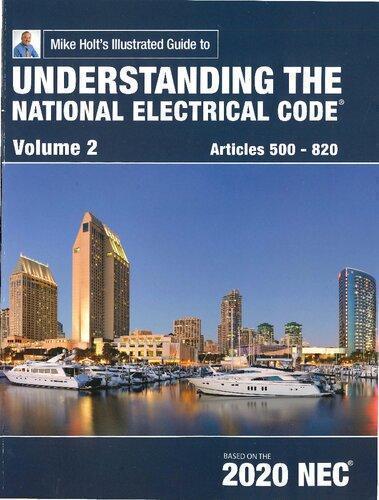
It was in that state of deep frustration, of seeing so many talented electricians hit a wall in their careers, that I understood the need for a different kind of guide. Not just a book that repeats the dense, legalistic language of the Code, but a bridge. A visual, practical, and common-sense bridge from the world of residential wiring to the complex world of commercial and industrial installations. And that’s the philosophy that is so clearly embodied in a book like the Illustrated Understanding of the National Electrical Code, Volume 2.
This isn’t just the next chapter; it’s the next level. This is the guide for the electrician who is ready to move beyond the basics and into the fire. It’s a promise to take the most complex, most intimidating, and most critically important articles of the NEC and to translate them into a clear, simple, and powerful visual language. It feels less like a textbook and more like a journeyman’s guide to becoming a master, written by someone who has actually walked the path.
The Philosophy: From Knowing the Rules to Understanding the System
I was skeptical, of course. I’ve seen enough “advanced” code books that are just a thicker, heavier, and more expensive version of the same old confusion. I needed to understand the philosophy behind this. Was this just more of the same, or was it a different way of thinking about the advanced principles of our trade?
The core idea, as I came to understand it, was a profound and deeply effective paradigm shift. The philosophy of an illustrated, two-volume approach is that you can’t just learn the Code as one giant, monolithic entity. You have to learn it in stages, just like you learn the trade itself. Volume 1 is about the fundamentals, the core principles, the language. Volume 2 is about the application of that language to the most complex and demanding systems.
This was a gut punch. I had spent years of my life trying to cram the entire NEC into my brain at once, and I was always overwhelmed. This approach was telling me that it was okay to learn in layers. It was about moving from knowing the individual rules to truly understanding the complex, interconnected systems that those rules govern.
The philosophy is that a single, well-drawn illustration of a motor control circuit is infinitely more powerful than ten pages of dense, technical text describing it. It’s about taking an abstract, and often terrifying, concept, like the wiring requirements for a classified hazardous location, and turning it into a clear, simple diagram that you can understand in a single glance.
It’s about context. It’s about showing you not just what the rule is, but why it exists in these specialized environments. The illustrations are not just pretty pictures; they are visual case studies. They show you the real-world application of the code in a hospital, in a gas station, in a factory. They show you the right way to do something, and, just as importantly, they show you the wrong way to do it, and the potentially catastrophic consequences of getting it wrong in these high-stakes environments.
And it’s about clarity. It’s about cutting through the noise, the jargon, and the endless, circular cross-references of the NEC’s advanced articles, and getting to the heart of the matter. It’s about taking a single, complex system and breaking it down into a simple, visual, and easily digestible piece of information. This wasn’t just a different way of presenting the Code; it was a different, and much more human, way of teaching the craft of the master electrician.
What’s Inside: A Visual Journey Through the Advanced Code
So what’s actually inside the book? I was expecting a simple continuation of the first volume. What I found was a complete, A-to-Z, and almost overwhelming visual operating system for the most challenging and most important parts of the National Electrical Code.
The journey picks up where the first volume left off, diving headfirst into the world of Special Occupancies. The early chapters are a masterclass in the unique, and often life-or-death, requirements for places like healthcare facilities. Instead of just reading the dense, clinical text of Article 517, you get clear, simple illustrations that show you the difference between the critical, life safety, and equipment branches. You see how to properly wire an operating room, how to ground an isolated power system, and why the rules are so incredibly stringent. You move on to hazardous (classified) locations, the gas stations, the chemical plants, the grain elevators. You get to see, in beautiful, clear diagrams, the difference between Class I, Division 1, and Class II, Division 2. The abstract concepts of explosion-proof and intrinsically safe equipment become tangible, understandable realities.
Then, you move into the core of industrial electrical work: Special Equipment. You get a deep, visual dive into electric motors, the workhorses of the modern world. The complex, intimidating rules of Article 430 are broken down into simple, logical, and illustrated steps. You learn how to size the conductors, the overloads, and the short-circuit and ground-fault protection for any motor. You see how to wire a motor control circuit. It’s the kind of practical, visual knowledge that can save you hours of frustration on the job site.
The book is packed with detailed, real-world illustrations of other complex systems. There are entire, beautifully illustrated chapters on transformers, on generators, on industrial control panels. The complex calculations for sizing services and feeders for large commercial and industrial loads are broken down into simple, step-by-step visual examples.
And the beauty of it is that it’s not just a book you read from front to back. It is a professional reference tool of the highest order. It’s a visual dictionary for the advanced articles of the National Electrical Code. When you’re on a complex industrial job site, and you’re faced with a confusing situation involving a transformer or a motor starter, you can just pull out the book, find the relevant section, and see a clear, simple illustration of what the Code requires. It’s like having a seasoned, and very patient, master electrician in your pocket, ready to draw you a picture whenever you get stuck.
The Benefits: More Than Just a Bigger Paycheck
So what are the real, tangible benefits of learning the advanced articles of the Code in this visual, illustrated way? It’s not just about being able to take on the bigger, more complex, and more lucrative jobs, although this book will almost certainly help you do that. It’s about a complete and total transformation of your confidence, your competence, and your value as a professional electrician.
The most obvious benefit is that you finally understand the most complex parts of the Code, on a deep, intuitive level. You stop just memorizing the rules for your exam, and you start understanding the why behind them. You understand the systems. This is the difference between being a journeyman and being a true master of the trade.
The second benefit is a massive increase in your speed, your efficiency, and your accuracy. When you can quickly and easily find a clear, visual answer to a complex Code question, you stop wasting time on the job site, scratching your head, and trying to decipher the dense, circular logic of the NEC. You can work faster, with more confidence, and with far fewer mistakes.
The third benefit is safety. This is the big one, and it’s even more critical in the world of commercial and industrial wiring. When you have a clear, visual understanding of the Code for these high-stakes environments, you are far less likely to make a mistake that could lead to a catastrophic equipment failure, a fire, an explosion, or something far, far worse. This book isn’t just about protecting your license; it’s about protecting your life, and the lives of every single person who will work in or near the powerful electrical systems you are building.
And the biggest benefit of all, for me, was the end of the intimidation. The advanced articles of the NEC, for most of my early career, were a source of deep fear and anxiety. They were the parts of the book that made me feel stupid. This illustrated approach transformed my relationship with them. They were no longer an enemy to be feared, but a series of complex and fascinating puzzles to be understood and respected. And that is a level of professional confidence and mastery that is absolutely priceless.
Who Is This For? The Journeyman on the Path to Mastery
So who is this really for? After spending years in the trade, and years teaching the next generation of electricians how to make this difficult but rewarding leap, I can tell you exactly who needs this book on their truck.
This is for the ambitious journeyman electrician, the one who is tired of just wiring houses and wants to break into the more challenging and more lucrative world of commercial and industrial work. This book is your bridge.
This is for the master electrician who is studying for their inspector certification and who needs a way to solidify their understanding of the most complex and esoteric parts of the Code.
This is for the electrical inspector, who needs a quick, clear, and authoritative visual reference to help them make the right, and safe, calls in the field on these complex installations.
This is for the electrical instructor, who is looking for a more powerful, more engaging, and more effective way to teach the advanced articles of the Code to their students.
And this is for the industrial maintenance technician, the one who has to troubleshoot and repair these complex systems on a daily basis and who needs a deep, practical understanding of how they are supposed to work.
This is not for the person who is content to stay in their comfort zone. This is not for the person who thinks that “good enough” is good enough. This is for the true craftsman. This is for the professional. This is for the person who is on the path to mastery, and who is ready to take the next, big, and often difficult, step.
Conclusion: The End of the Intimidation
So here I am. The days of being intimidated by the thick, dense, and often completely confusing advanced articles of the National Electrical Code are a thing of the past. The Illustrated Understanding of the National Electrical Code, Volume 2 is more than just a textbook. It is a complete, A-to-Z, and battle-tested blueprint for mastering the complex language of commercial and industrial electrical safety.
It is a declaration of independence from the tyranny of confusing, legalistic text. With its clear, simple, and powerful illustrations, its real-world, in-the-trenches examples, and its relentless focus on helping you understand the why behind the rules, it is, in my honest and battle-tested opinion, one of the single most important and game-changing tools that any serious, professional electrician can have in their arsenal.
If you are a journeyman who is ready to become a master, an inspector who is committed to safety, or just a serious student of the trade, and you are tired of the confusion, the frustration, and the intimidation of the advanced articles of the NEC, then this is the answer you’ve been looking for. It is the end of the guesswork. It is the end of the doubt. And it is the beginning of a smarter, safer, and more confident way to build your career.
Related products