
Introduction: A Language Written in Shock and Fire
Let me tell you about a feeling. It’s the standing-in-a-half-finished-building, staring-at-a-rat’s-nest-of-wiring, a-cold-knot-of-dread-in-your-stomach kind of feeling. You’re a young electrician, an apprentice, maybe a homeowner who’s gotten in a little too deep on a DIY project. You’re holding a copy of the National Electrical Code, a book so thick and so dense it feels like it could stop a bullet. You’re flipping through the pages, looking for an answer to what should be a simple question, and you’re completely, utterly, and profoundly lost.
I have been there. I have lived in that quiet, desperate state of code-induced confusion for the better part of my career. The NEC is not a book; it’s a legal document. It’s a language written in the aftermath of tragedies, a collection of rules designed to prevent shock, fire, and death. And it is written in a language that can feel as foreign and as impenetrable as ancient Sumerian. It’s full of cross-references, exceptions to the exceptions, and tables so complex they look like the launch codes for a nuclear submarine.
It’s a frustrating, demoralizing, and deeply intimidating experience. You’re trying to do the right thing, to do the safe thing, but the rulebook itself feels like it’s designed to confuse you. And in our line of work, confusion isn’t just an inconvenience; it’s a liability. Confusion can lead to mistakes. And mistakes, in the world of electricity, can have catastrophic, and often fatal, consequences.
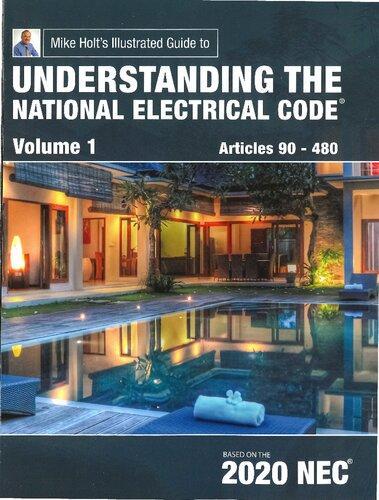
It was in that state of deep frustration, of seeing so many good, well-intentioned people struggle with the complexity of the Code, that I started looking for a better way to teach it. I started looking for a bridge between the dense, legalistic language of the NEC and the real, practical world of pulling wire and connecting devices. And that’s the philosophy that is so clearly embodied in a book like the Illustrated Understanding of the National Electrical Code.
This isn’t just another textbook. This isn’t a dry, academic rehashing of the Code. This is a translation. This is a guide for the visual learner, for the hands-on practitioner, for the person who learns by seeing, not just by reading. It’s a promise to take the abstract, confusing language of the NEC and to ground it in the real world with clear, simple, and powerful illustrations. It feels less like a textbook and more like a conversation with a master electrician who is finally willing to show you, not just tell you, how it’s done.
The Philosophy: From Abstract Rules to Tangible Reality
I was skeptical, of course. My shelves are already overflowing with code-commentary books that are just as dense and confusing as the Code itself. I needed to understand the philosophy behind this. Was this just another book with a few stock photos thrown in, or was it a different way of thinking about electrical education entirely?
The core idea, as I came to understand it, was a profound and deeply effective paradigm shift. The philosophy of an illustrated guide is that you cannot truly understand a complex, physical concept until you can see it. It’s about recognizing that the human brain is a visual processing machine. We are wired to understand pictures, diagrams, and illustrations far more quickly and deeply than we can understand dense, legalistic text.
This was a gut punch. I had spent years of my life trying to memorize the Code, to brute-force the information into my brain through sheer repetition. This book was telling me that there was a smarter, more elegant, and more effective way. It was telling me that I could work with the natural inclinations of my brain, not against them.
The philosophy is that a single, well-drawn illustration can often be more powerful and more illuminating than a thousand words of technical explanation. It’s about taking an abstract rule, like the one about conductor ampacity adjustment for ambient temperature, and turning it into a clear, simple diagram that you can understand in a single glance.
It’s about context. It’s about showing you not just what the rule is, but why it exists. The illustrations are not just pretty pictures; they are visual stories. They show you the real-world application of the code. They show you the right way to do something, and, just as importantly, they show you the wrong way to do it, and the potentially disastrous consequences of getting it wrong.
And it’s about clarity. It’s about cutting through the noise, the jargon, and the endless cross-references of the NEC, and getting to the heart of the matter. It’s about taking a single, complex concept and breaking it down into a simple, visual, and easily digestible piece of information. This wasn’t just a different way of presenting the Code; it was a different, and much more human, way of teaching it.
What’s Inside: A Visual Journey Through the Code
So what’s actually inside the book? I was expecting a simple codebook with a few diagrams sprinkled in. What I found was a complete, A-to-Z, and almost overwhelming visual operating system for the entire National Electrical Code.
The journey starts, as it should, with the foundational principles. The early chapters are a masterclass in the fundamentals of electrical theory, of circuit design, of grounding and bonding. But instead of just dry equations and definitions, you get clear, simple illustrations that show you how electricity actually behaves. You see the flow of electrons. You see how a circuit works. It’s the kind of foundational, visual learning that I wish I had had in my first year as an apprentice.
Then, you move into the core of the NEC, the articles that govern the day-to-day work of every electrician. You get a deep, visual dive into wiring and protection. You see the different types of conductors, the rules for ampacity, the requirements for overcurrent protection. The complex tables and charts of the NEC are broken down into simple, easy-to-understand visual guides.
The book is packed with detailed, real-world illustrations of wiring methods and materials. You see the correct way to install conduit, to run armored cable, to wire a junction box. You see the code-compliant way to install switches, receptacles, and lighting fixtures. Every single illustration is a practical, in-the-trenches lesson.
And it doesn’t shy away from the complex stuff. There are entire, beautifully illustrated chapters on special occupancies, like healthcare facilities and hazardous locations, where the rules are even more stringent and the stakes are even higher. There are deep dives into motor circuits, transformers, and service calculations.
And the beauty of it is that it’s not just a book you read from front to back. It’s a reference tool. It’s a visual dictionary of the National Electrical Code. When you’re on a job site, and you’re faced with a confusing situation, you can just pull out the book, find the relevant section, and see a clear, simple illustration of what the Code requires. It’s like having a master electrician in your pocket, ready to draw you a picture whenever you get stuck.
The Benefits: More Than Just Passing the Test
So what are the real, tangible benefits of learning the Code in this visual, illustrated way? It’s not just about being able to pass your journeyman or your master electrician exam, although this book will almost certainly help you do that. It’s about a complete and total transformation of your confidence, your competence, and your safety as an electrician.
The most obvious benefit is that you actually understand the Code, on a deep, intuitive level. You stop just memorizing the rules, and you start understanding the why behind them. This is the difference between being a technician and being a true craftsman.
The second benefit is a massive increase in your speed and efficiency. When you can quickly and easily find a clear, visual answer to a Code question, you stop wasting time on the job site, scratching your head, and trying to decipher the dense text of the NEC. You can work faster, with more confidence, and with fewer mistakes.
The third benefit is safety. This is the big one. When you have a clear, visual understanding of the Code, you are far less likely to make a mistake that could lead to a fire, a shock, or something far worse. This book isn’t just about protecting your license; it’s about protecting your life, and the lives of the people who will live and work in the buildings you wire.
And the biggest benefit of all, for me, was the end of the intimidation. The NEC, for most of my early career, was a source of fear and anxiety. It was a book that made me feel stupid. This illustrated approach transformed my relationship with it. It was no longer an enemy to be feared, but a tool to be understood and respected. And that is a level of professional confidence that is absolutely priceless.
Who Is This For? The Visual Learner, The Craftsman
So who is this really for? After spending years in the trade, and years teaching the next generation of electricians, I can tell you exactly who needs this book on their truck.
This is for the electrical apprentice, the one who is just starting out and feels completely and utterly overwhelmed by the sheer volume and complexity of the National Electrical Code. This book will be your best friend.
This is for the journeyman electrician who is studying for their master’s exam and who needs a way to solidify their understanding of the more complex and esoteric parts of the Code.
This is for the electrical inspector, who needs a quick, clear, and authoritative visual reference to help them make the right calls in the field.
This is for the electrical instructor, who is looking for a more powerful, more engaging, and more effective way to teach the Code to their students.
And this is for the serious, safety-conscious DIYer, the one who understands that doing electrical work yourself is a massive responsibility, and who wants to make sure they are doing it right, and doing it safely.
This is not for the person who is looking for shortcuts. This is not for the person who thinks that “good enough” is good enough. This is for the true craftsman. This is for the professional. This is for the person who believes that the job isn’t done until it’s done right.
Conclusion: The End of the Confusion
So here I am. The days of being intimidated by the thick, dense, and often confusing language of the National Electrical Code are a thing of the past. The Illustrated Understanding of the National Electrical Code is more than just a textbook. It is a complete, A-to-Z, and battle-tested blueprint for mastering the language of electrical safety.
It is a declaration of independence from the tyranny of confusing, legalistic text. With its clear, simple, and powerful illustrations, its real-world examples, and its relentless focus on helping you understand the why behind the rules, it is, in my honest and battle-tested opinion, one of the single most important and game-changing tools that any electrician can have in their arsenal.
If you are an apprentice, a journeyman, a master, an inspector, or just a serious student of the trade, and you are tired of the confusion, the frustration, and the intimidation of the NEC, then this is the answer you’ve been looking for. It is the end of the guesswork. It is the end of the doubt. And it is the beginning of a smarter, safer, and more confident way to do your work.
ISBN: 195043107X
Related products