

Introduction: A Subject I Was Conditioned to Hate
Let me tell you about a feeling. It’s the first-day-of-chemistry-class, staring-at-a-textbook-so-thick-it-could-be-used-as-a-doorstop, a-cold-knot-of-pure-dread-in-your-stomach kind of feeling. You’re flipping through the pages, and you’re met with a dense, impenetrable wall of text, of complex formulas, of abstract concepts that feel like they were written in a different language, a language that you are convinced you will never, ever be able to understand.
I have been there. I have lived in that quiet, desperate state of scientific anxiety for years. Chemistry, for me, was not a subject; it was a punishment. It was a class that I had been conditioned, by a series of dry, uninspired teachers and even drier, more uninspired textbooks, to hate. It was a world of rote memorization, of plugging numbers into formulas without any real understanding of what they meant, of a million tiny, disconnected facts that I was supposed to somehow cram into my brain just long enough to pass the test, and then promptly forget.
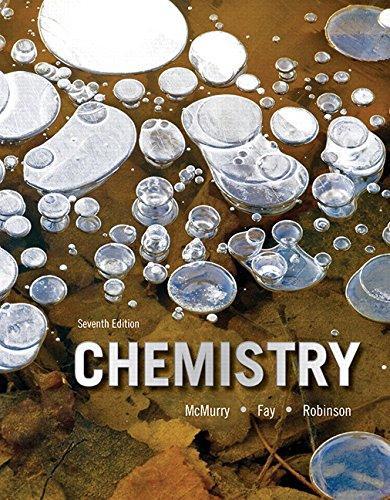
It was in that state of complete and utter frustration, of feeling like chemistry was a secret, exclusive club that I would never be invited into, that I was forced to confront a new textbook. It was Chemistry, 7th Edition, by Steve and Susan Zumdahl. I was expecting more of the same. I was expecting another thousand pages of dense, academic, and soul-crushing prose.
But from the very first chapter, I realized that this book was different. It felt different. It was written by a human being who seemed to understand, and even to empathize with, my own fear and confusion. It wasn’t just a list of facts; it was a conversation. It was a story. It was a promise to not just tell me about chemistry, but to help me understand it. It felt less like a textbook and more like a patient, and surprisingly engaging, guide to a world that I had always believed was permanently closed to me.
The Philosophy: From Rote Memorization to Real Understanding
I was cynical, of course. My brain is hardwired to be. I had been burned by enough terrible textbooks to believe that they were all the same. I needed to understand the philosophy behind this one. Was this just a slightly friendlier version of the same old, broken approach, or was it a different way of thinking about science education entirely?
The core idea, as I came to understand it, was a profound and deeply refreshing paradigm shift. The philosophy of the Zumdahl textbook is a direct and unapologetic rebellion against the tyranny of rote memorization. It is built on the simple, but revolutionary, belief that you cannot truly learn chemistry, or any science, by simply memorizing a list of facts and formulas. You have to understand the why. You have to understand the concepts.
This was a gut punch. I had spent my entire academic life being trained to be a regurgitation machine. This book was telling me that that was a waste of time. It was telling me that my brain was not a hard drive to be filled with data, but a muscle to be trained in the art of critical thinking and problem-solving.
The philosophy is that a deep, conceptual understanding is the foundation of everything. The book doesn’t just throw a formula at you and tell you to use it. It spends pages, and a lot of very clever analogies, explaining the underlying concepts in a way that you can actually visualize and understand. It builds the house from the foundation up, not from the roof down.
It’s about teaching you to think like a chemist. It’s about moving away from the “plug and chug” method of problem-solving and toward a more flexible, more powerful, and more intuitive approach. The book constantly asks you to question, to think, to reason your way through a problem before you even think about picking up a calculator. It’s about building a mental model of the chemical world.
And it’s about making the subject relevant and engaging. The book is filled with real-world examples that connect the abstract concepts of chemistry to the world you actually live in. It shows you the chemistry of cooking, of medicine, of the environment. It transforms chemistry from a dry, academic subject into a living, breathing, and incredibly fascinating story. This wasn’t just a different way of presenting the information; it was a different, and much more human, way of teaching.
What’s Inside: A Guided Tour of the Molecular World
So what does this journey of understanding actually look like? The book is not just a collection of chapters; it is a carefully structured, and beautifully illustrated, guided tour of the entire molecular world.
The journey starts, as it should, with the absolute foundational principles. The early chapters are a masterclass in the fundamentals of atomic structure, of chemical bonding, of stoichiometry. But instead of just a dry recitation of the rules, you get clear, simple illustrations, and a text that is constantly explaining the why. You don’t just learn that electrons occupy orbitals; you learn why they do, and what that means for the behavior of an atom.
Then, you move into the core concepts of chemistry. You get a deep, visual dive into the states of matter, into the behavior of gases, into the intricate world of chemical reactions. The complex, and often intimidating, topics of thermochemistry and kinetics are broken down into simple, logical, and easy-to-understand steps. The book is famous for its unique, multi-step approach to problem-solving, an approach that teaches you to think your way through a problem before you ever start to calculate.
The book is packed with detailed, real-world examples and stunning, full-color illustrations and photographs that bring the molecular world to life. You don’t just read about the structure of a crystal lattice; you see it. You don’t just read about the colors of a chemical reaction; you see them. It is a visual feast that makes the abstract concepts of chemistry feel tangible and real.
And it doesn’t shy away from the hard stuff. There are entire, beautifully explained chapters on acid-base chemistry, on electrochemistry, on the complex and often mind-bending world of organic chemistry. But at every step of the way, the focus remains the same: on conceptual understanding, on problem-solving, and on connecting the chemistry to the real world. It is a book that respects the intelligence of the student, a book that believes that anyone, with the right guide, can come to not just learn, but to truly understand, and even to love, this beautiful and fascinating subject.
The Benefits: More Than Just a Good Grade
So what are the real, tangible benefits of learning chemistry from a book like this? It’s not just about being able to pass your exams, although this book will almost certainly help you get a better grade than you ever thought possible. It is about a complete and total transformation of your relationship with science, and with your own ability to think critically.
The most obvious benefit is that you will actually understand chemistry, on a deep, intuitive, and lasting level. You will stop just memorizing the facts, and you will start understanding the fundamental principles that govern the entire material world. This is the difference between being a student and being a scientist.
The second benefit is a massive increase in your problem-solving skills. The Zumdahl approach to problem-solving is a superpower that you will carry with you for the rest of your academic and professional life. You will learn how to break down complex problems into small, manageable steps. You will learn how to think critically, how to ask the right questions, and how to reason your way to a solution.
The third benefit is confidence. This is the big one. The feeling of being intimidated by, and stupid in the face of, a complex scientific subject is a painful and deeply demoralizing one. This book, with its clear, patient, and empathetic approach, will dissolve that fear. It will replace it with the quiet, steady confidence that comes from real, genuine understanding.
And the biggest benefit of all, for me, was a newfound sense of wonder. The world, which had once seemed so mundane, so ordinary, was suddenly revealed to be a place of incredible, and almost magical, chemical complexity. The rusting of a nail, the baking of a cake, the very act of breathing—it was all a beautiful, intricate, and understandable chemical dance.
Who Is This For? The Curious Mind
So who is this really for? After living with this book, after having my entire relationship with a subject transformed by it, I can tell you exactly who needs to have this on their desk.
This is for the high school or college student who is struggling with chemistry, who feels like they are drowning in a sea of facts and formulas, and who is desperately looking for a lifeline. This book is that lifeline.
This is for the science enthusiast, the lifelong learner, the curious mind who wants to understand the world on a deeper, more fundamental level.
This is for the teacher or the tutor, who is looking for a more powerful, more engaging, and more effective way to teach the beautiful and often challenging subject of chemistry to their students.
And this is for the person who believes that they are “bad at science.” This book will prove you wrong. It will show you that, with the right guide, you are capable of understanding even the most complex ideas.
This is not for the person who is just looking for a list of facts to cram for a test. This is for the person who wants to understand. This is for the person who is not afraid to think. This is for the person who is ready to see the world with new eyes.
Conclusion: The End of the Intimidation
So here I am. The days of being intimidated by the thick, dense, and often completely incomprehensible language of chemistry are a thing of the past. The Zumdahl “Chemistry” textbook is more than just a book. It is a complete, A-to-Z, and battle-tested blueprint for mastering the central science.
It is a declaration of independence from the tyranny of rote memorization. With its clear, simple, and powerful conceptual explanations, its real-world examples, and its relentless focus on helping you understand the why behind the what, it is, in my honest and battle-tested opinion, one of the single most important and game-changing tools that any student of science can have in their arsenal.
If you are a student, a teacher, or just a curious human being, and you are tired of the confusion, the frustration, and the intimidation of chemistry, then this is the answer you’ve been looking for. It is the end of the guesswork. It is the end of the doubt. And it is the beginning of a smarter, more confident, and more joyful relationship with the beautiful and fascinating world of molecules.
Related products