
Introduction: The Two Languages I Couldn’t Translate
Let me tell you about a feeling. It’s the late-night-in-the-university-library, staring-at-two-different-textbooks-open-on-your-desk, a-cold-knot-of-deep-frustration-in-your-stomach kind of feeling. On your left, you have your organic chemistry textbook, a dense, intimidating world of elegant but abstract reactions, of electron pushing, of stereochemistry, of molecules that feel like theoretical art projects. On your right, you have your molecular biology textbook, a vibrant, chaotic, and beautiful world of DNA, of proteins, of the intricate, messy machinery of life.
You know, on some deep, intuitive level, that these two worlds are supposed to be connected. You know that the living cell is just a vessel for the most complex and beautiful organic chemistry in the universe. But the two textbooks don’t speak to each other. They are written in two different languages, by two different tribes of scientists, and there is no translator in sight.
I have been there. I have lived in that quiet, desperate state of academic schizophrenia for years. I have been a student who loved both chemistry and biology, but who was constantly frustrated by the artificial wall that our educational system has built between them. It’s a frustrating, demoralizing, and deeply uninspiring experience. You’re forced to learn two different sets of facts, two different ways of thinking, without ever being shown the beautiful, elegant bridge that connects them.
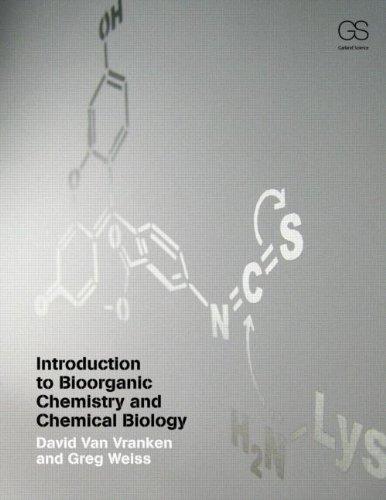
It was in that state of complete and utter frustration, of feeling like I was getting two incomplete halves of a much bigger, more beautiful picture, that I first encountered An Introduction to Bioorganic Chemistry and Chemical Biology. The title itself was a promise. It was a promise to finally bridge that gap, to create a unified field of study that honored both the rigor of chemistry and the complexity of biology.
This wasn’t just another textbook. It wasn’t a dry, academic rehashing of two different subjects. This was a translation. This was a guide for the interdisciplinary thinker, for the student who is not satisfied with the old, siloed way of learning. It was a promise to take the elegant, predictable rules of organic chemistry and to show how they play out in the messy, chaotic, and beautiful context of the living cell. It felt less like a textbook and more like the Rosetta Stone for the language of life itself.
The Philosophy: Life is Just Chemistry in a Fancy Box
I was skeptical, of course. I’ve seen enough “interdisciplinary” textbooks that are just a clumsy, stapled-together collection of chapters from two different fields. I needed to understand the philosophy behind this one. Was this just more of the same, or was it a different way of thinking about science itself?
The core idea, as I came to understand it, was a profound and deeply elegant paradigm shift. The philosophy of this book is that there is no wall between chemistry and biology. There is no separation. Life is not some magical, mystical force that is separate from the laws of physics and chemistry. Life is chemistry. It is the most complex, the most beautiful, and the most mind-bogglingly sophisticated chemistry in the universe, all happening inside the fancy, compartmentalized box of a cell.
This was a gut punch. I had spent my entire academic life being trained to see the two fields as separate. This book was telling me that that was a lie. It was telling me that to truly understand biology, you have to be a chemist. And to truly appreciate the power of chemistry, you have to see it in its ultimate context: life itself.
The philosophy is that a deep, mechanistic understanding is the foundation of everything. The book doesn’t just tell you that an enzyme catalyzes a reaction. It shows you the beautiful, elegant, and often surprisingly simple organic chemistry that is happening in the active site of that enzyme. It pulls back the curtain on the magic of biology and reveals the beautiful, logical machinery of chemistry that is running the show.
It’s about teaching you to think like a chemical biologist. It’s about learning to see the cell not as a collection of parts, but as a dynamic, interconnected chemical system. It’s about learning to ask the right questions: How does this protein fold? How does this drug bind to its receptor? How does this enzyme achieve its incredible catalytic power? It’s about building a mental model of the molecular world of the cell.
And it’s about making the subject relevant and exciting. The book is filled with real-world examples from the forefront of chemical biology research. It connects the foundational concepts to the development of new drugs, to the understanding of diseases, and to the engineering of new biological systems. It transforms the two, often dry, academic subjects into a single, vibrant, and incredibly fascinating story of scientific discovery.
What’s Inside: A Guided Tour of the Cell’s Chemical Machinery
So what does this journey of understanding actually look like? The book is not just a collection of chapters; it is a carefully structured, and beautifully illustrated, guided tour of the entire, intricate chemical machinery of the cell.
The journey starts, as it should, with the foundational principles. The early chapters are a masterclass in the fundamentals of the organic chemistry of life. You get a deep, but accessible, dive into the structure and function of the key building blocks: the amino acids, the nucleotides, the sugars, the lipids. But it’s not just a dry recitation of facts. At every step, the book is connecting the chemical structure of these molecules to their biological function.
Then, you move into the core of bioorganic chemistry. You get a deep, mechanistic dive into the world of enzymes, the master catalysts of the cell. You learn about the incredible strategies that enzymes use to accelerate chemical reactions, and you see, in beautiful, clear diagrams, the elegant, arrow-pushing mechanisms of organic chemistry that are at play.
The book is packed with detailed, real-world examples and stunning, full-color illustrations that bring the molecular world to life. You don’t just read about the structure of DNA; you see the chemical forces that hold it together. You don’t just read about how a drug works; you see, on a molecular level, how it fits into the active site of its target protein. It is a visual feast that makes the abstract concepts of chemical biology feel tangible and real.
And it doesn’t shy away from the hard stuff. There are entire, beautifully explained chapters on the chemical logic of metabolism, on the synthesis of complex natural products, on the cutting-edge techniques used in modern chemical biology research. But at every step of the way, the focus remains the same: on a deep, conceptual, and mechanistic understanding, and on connecting the chemistry to the biology. It is a book that respects the intelligence of the student, a book that believes that anyone, with the right guide, can come to not just learn, but to truly understand, and even to love, this beautiful and fascinating interdisciplinary world.
The Benefits: More Than Just a Fusion of Two Subjects
So what are the real, tangible benefits of learning in this integrated, interdisciplinary way? It’s not just about getting a good grade in two different classes at once. It is about a complete and total transformation of your understanding of the scientific world.
The most obvious benefit is that you will finally see the big picture. You will stop seeing chemistry and biology as two separate, disconnected subjects, and you will start to see them as two sides of the same, beautiful coin. You will understand the fundamental, chemical principles that govern the entire biological world.
The second benefit is a massive increase in your critical thinking and problem-solving skills. The book’s relentless focus on mechanistic understanding will train you to think like a real scientist. You will learn how to break down complex biological problems into their fundamental chemical components. You will learn how to think critically, how to ask the right questions, and how to reason your way to a solution.
The third benefit is confidence. This is the big one. The feeling of being intimidated by, and lost in the space between, two complex scientific subjects is a frustrating and deeply demoralizing one. This book, with its clear, patient, and elegant approach, will dissolve that frustration. It will replace it with the quiet, steady confidence that comes from real, genuine, and integrated understanding.
And the biggest benefit of all, for me, was a newfound sense of awe. The living world, which had once seemed so magical and mysterious, was suddenly revealed to be a place of incredible, and almost unimaginable, chemical elegance. The folding of a protein, the replication of DNA, the catalytic power of an enzyme—it was all a beautiful, intricate, and understandable chemical dance.
Who Is This For? The Interdisciplinary Thinker
So who is this really for? After living with this book, after having my entire relationship with science transformed by it, I can tell you exactly who needs to have this on their desk.
This is for the biology student who has always felt that they were missing the deeper, chemical understanding of the systems they were studying. This is for the chemistry student who has always wanted to see the real-world, biological application of the beautiful, abstract reactions they were learning.
This is for the pre-med student, who needs to have a deep, mechanistic understanding of how the human body works on a molecular level, and how drugs interact with it.
This is for the aspiring research scientist, who knows that the future of scientific discovery lies not in the old, rigid silos, but in the exciting, interdisciplinary spaces between them.
And this is for the curious mind, the lifelong learner, who is not satisfied with a superficial understanding of the world, and who wants to understand the very chemical basis of life itself.
This is not for the person who just wants a list of facts to memorize. This is for the person who wants to understand. This is for the person who is not afraid to think. This is for the person who is ready to see the world with new, and much more insightful, eyes.
Conclusion: The End of the Silos
So here I am. The days of being frustrated by the artificial, and ultimately imaginary, wall between the worlds of chemistry and biology are a thing of the past. “An Introduction to Bioorganic Chemistry and Chemical Biology” is more than just a textbook. It is a complete, A-to-Z, and battle-tested blueprint for understanding the central, unifying principles of the molecular life sciences.
It is a declaration of independence from the tyranny of the old, rigid, and siloed way of teaching and learning science. With its clear, simple, and powerful conceptual explanations, its real-world examples, and its relentless focus on helping you to understand the why behind the what, it is, in my honest and battle-tested opinion, one of the single most important and game-changing tools that any student of the molecular sciences can have in their arsenal.
If you are a student, a teacher, or just a curious human being, and you are tired of the confusion, the frustration, and the intimidation of the old, disconnected way of looking at the world, then this is the answer you’ve been looking for. It is the end of the guesswork. It is the end of the doubt. And it is the beginning of a smarter, more confident, and more integrated relationship with the beautiful and fascinating world of molecules.
Related products