

Introduction: The Agony of the “Magic” Black Box
Let me tell you about a feeling. It’s the 1 AM, staring-at-a-piece-of-code-you-copied-from-Stack-Overflow, a-cold-knot-of-deep-and-profound-imposter-syndrome-in-your-stomach kind of feeling. You’re a programmer, a builder, a creator. You can make things work. You can stitch together libraries and frameworks to build a functioning application. But you have a secret. You don’t really, truly understand what’s happening under the hood. You are a magician who has memorized a few spells, but you have no understanding of the fundamental, underlying principles of magic itself.
I have been there. I have lived in that quiet, desperate state of “programmer anxiety” for years. I am a self-taught developer. I learned by doing, by building, by breaking things and then frantically Googling how to fix them. But I always felt like there was a giant, gaping hole in my knowledge. That hole was a subject that I had been conditioned, by its very name and by the dense, academic textbooks that surrounded it, to fear: Algorithms.
It’s a frustrating, demoralizing, and deeply isolating experience. You feel like you are on the outside of a secret, exclusive club, the club of “real” computer scientists. You hear them talk about Big O notation, about sorting algorithms, about graph traversals, and it feels like they are speaking a different, and much more intelligent, language. You are a practitioner, but you don’t understand the theory. And you have this deep, gnawing feeling that without that foundational understanding, you will always be just a tinkerer, a script kiddie, not a true engineer.
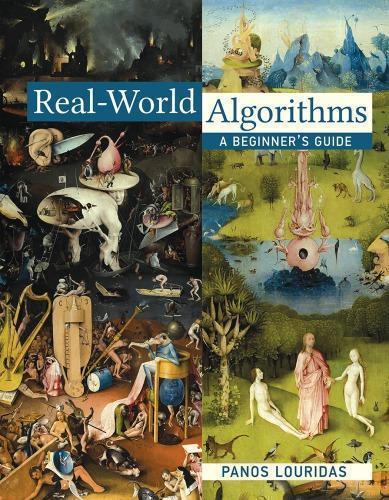
It was in that state of complete and utter frustration, of feeling like a fraud in my own profession, that I started looking for a different kind of guide. Not another dry, academic, and proof-heavy textbook that was written for PhD students at MIT. I was looking for a bridge. A way into this intimidating world for the practical, self-taught builder. And that’s what led me, with a massive dose of skepticism, to a book with a title that was a promise in itself: Real-World Algorithms: A Beginner’s Guide.
This wasn’t just another textbook. It was a declaration of a different philosophy. It was a promise to take this abstract, terrifying, and often brutally theoretical subject and to ground it in the real, messy, and practical world. It felt less like a textbook and more like a user manual for the very logic that powers our digital world.
The Philosophy: From Abstract Theory to Practical Application
I was cynical, of course. My brain is hardwired to be. I had tried to read the classic algorithm textbooks before, and they had always defeated me, leaving me feeling more stupid and more intimidated than when I started. I needed to understand the philosophy behind this one. Was this just a dumbed-down version of the same old, broken approach, or was it a different way of thinking about computer science education itself?
The core idea, as I came to understand it, was a profound and deeply refreshing paradigm shift. The philosophy of “Real-World Algorithms” is that you cannot truly understand an algorithm by just looking at its abstract, mathematical proof. You have to understand what it does. You have to understand what real-world, human problem it was designed to solve.
This was a gut punch. I had spent my entire life believing that I was “bad” at algorithms because I couldn’t understand the dense, academic theory. This book was telling me that that was a lie. It was telling me that I wasn’t bad at algorithms; I was just being taught them in the wrong, and most boring, way.
The philosophy is that a deep, problem-first understanding is the foundation of everything. The book doesn’t start with the algorithm; it starts with the problem. A real, tangible, and often relatable problem. How does a GPS navigate the shortest path from your house to a restaurant? How does a social network recommend new friends? How does a computer compress a giant file into a smaller one? It starts with the magic trick, and then it pulls back the curtain to show you the elegant, and often surprisingly simple, mechanism that makes it all work.
It’s about teaching you to think like a problem-solver. It’s about learning to see the world not as a series of facts to be memorized, but as a series of interesting puzzles that can be solved with the right set of logical tools. The book constantly asks you to think, to reason, to understand the trade-offs between different approaches.
And it’s about making the subject accessible and engaging. The book is filled with clear, simple illustrations and analogies that connect the abstract, and often intimidating, concepts of computer science to the world you actually live in. It transforms the subject from a dry, academic chore into a living, breathing, and incredibly fascinating story of human ingenuity.
What’s Inside: A Guided Tour of the Digital World’s Logic
So what does this journey of understanding actually look like? The book is not just a collection of chapters; it is a carefully structured, and beautifully illustrated, guided tour of the entire, and often invisible, logical machinery of our modern digital world.
The journey starts, as it should, with the absolute foundational principles. The early chapters are a masterclass in the fundamentals of what an algorithm is, how to measure its performance (the dreaded but necessary Big O notation), and the basic data structures that are the building blocks of every complex system. But instead of just a dry recitation of the definitions, you get clear, simple illustrations and analogies that make these abstract concepts feel tangible and real.
Then, you move into the core algorithms that run the modern world. You get a deep, but always practical, dive into the world of sorting and searching. You learn about the different strategies, from the simple bubble sort to the elegant and efficient quicksort. But you don’t just learn how they work; you learn when and why you would use one over the other.
The book is packed with detailed, real-world examples. You learn about the graph algorithms that power Google Maps and social networks. You learn about the string algorithms that are at the heart of every search engine and word processor. You learn about the cryptography that keeps your online communications secure. You learn about the data compression algorithms that make streaming movies and music possible.
And at every step of the way, the focus remains the same: on a deep, conceptual, and problem-first understanding. It is a book that respects the intelligence of the beginner, a book that believes that anyone, with the right guide, can come to not just learn, but to truly understand, and even to love, this beautiful and fascinating subject.
The Benefits: More Than Just a Better Coder
So what are the real, tangible benefits of learning about algorithms in this real-world, practical way? It’s not just about being able to pass a technical interview at a big tech company, although this book will almost certainly help you do that. It is about a complete and total transformation of your confidence, your competence, and your entire identity as a programmer.
The most obvious benefit is that you will finally understand what is actually happening under the hood. You will stop just blindly importing libraries and calling functions, and you will start to understand the deep, elegant, and often beautiful logic that makes them all work. This is the difference between being a technician and being a true engineer.
The second benefit is a massive increase in your problem-solving skills. The book’s relentless focus on the real-world application of these logical tools will train your brain to think in a more structured, more efficient, and more powerful way. You will learn how to break down complex problems into their fundamental components and to choose the right tool for the job.
The third benefit is confidence. This is the big one. The feeling of imposter syndrome, the fear that you are a fraud who is just one tough question away from being exposed, is a painful and deeply demoralizing one. This book, with its clear, patient, and accessible approach, will dissolve that fear. It will replace it with the quiet, steady, and unshakeable confidence that comes from real, genuine, and deep understanding.
And the biggest benefit of all, for me, was a newfound sense of awe. The digital world, which had once seemed so magical and so mysterious, was suddenly revealed to be a place of incredible, and almost unimaginable, human ingenuity. The ability to find the shortest path between two points, to compress a movie into a streamable file, to send a secure message across the world—it was all a beautiful, intricate, and understandable logical dance.
Who Is This For? The Curious Builder
So who is this really for? After living with this book, after having my entire relationship with a subject I thought I feared transformed by it, I can tell you exactly who needs to have this on their desk.
This is for the self-taught programmer, the one who has the practical skills but who has always felt that they were missing the foundational, theoretical knowledge of a traditional computer science education. This book is the bridge that you have been looking for.
This is for the computer science student, who is struggling with their traditional, and often brutally abstract, algorithms course, and who is desperately looking for a way to connect the theory to the real world.
This is for the product manager, the data analyst, the tech-adjacent professional, who doesn’t need to write the code themselves, but who needs to have a deep, conceptual understanding of what is possible, of what the trade-offs are, and of how to speak the language of the engineers they work with.
And this is for the curious mind, the lifelong learner, who is not satisfied with a superficial understanding of the world, and who wants to understand the fundamental, logical principles that are so profoundly shaping our modern, digital lives.
This is not for the person who is just looking for a list of code snippets to copy and paste. This is for the person who wants to understand. This is for the person who is not afraid to think. This is for the person who is ready to see the world with new, and much more insightful, eyes.
Conclusion: The End of the Black Box
So here I am. The days of being intimidated by, and feeling like an imposter in the face of, the complex and often mysterious world of algorithms are a thing of the past. “Real-World Algorithms: A Beginner’s Guide” is more than just a textbook. It is a complete, A-to-Z, and battle-tested blueprint for understanding the fundamental logic of our digital world.
It is a declaration of independence from the tyranny of the dry, abstract, and often inaccessible academic approach. With its clear, simple, and powerful conceptual explanations, its real-world examples, and its relentless focus on helping you to understand the why behind the what, it is, in my honest and battle-tested opinion, one of the single most important and game-changing tools that any aspiring programmer or technologist can have in their arsenal. If you are a student, a builder, or just a curious human being, and you are tired of the confusion, the frustration, and the intimidation of the black box, then this is the answer you’ve been looking for.
Publisher: MIT Press
Language: en
ISBN-10: 0262035707
ISBN-13: 9780262035705
Page Count: 527
Categories: Computers
Description: An introduction to algorithms for readers with no background in advanced mathematics or computer science, emphasizing examples and real-world problems. Algorithms are what we do in order not to have to do something. Algorithms consist of instructions to carry out tasks—usually dull, repetitive ones. Starting from simple building blocks, computer algorithms enable machines to recognize and produce speech, translate texts, categorize and summarize documents, describe images, and predict the weather. A task that would take hours can be completed in virtually no time by using a few lines of code in a modern scripting program. This book offers an introduction to algorithms through the real-world problems they solve. The algorithms are presented in pseudocode and can readily be implemented in a computer language. The book presents algorithms simply and accessibly, without overwhelming readers or insulting their intelligence. Readers should be comfortable with mathematical fundamentals and have a basic understanding of how computers work; all other necessary concepts are explained in the text. After presenting background in pseudocode conventions, basic terminology, and data structures, chapters cover compression, cryptography, graphs, searching and sorting, hashing, classification, strings, and chance. Each chapter describes real problems and then presents algorithms to solve them. Examples illustrate the wide range of applications, including shortest paths as a solution to paragraph line breaks, strongest paths in elections systems, hashes for song recognition, voting power Monte Carlo methods, and entropy for machine learning. Real-World Algorithms can be used by students in disciplines from economics to applied sciences. Computer science majors can read it before using a more technical text.
Related products



New Books
New Books