Introduction: The Search for a Clue in a Complicated World
Let me tell you about a feeling. It’s the late-night, scrolling-through-endless-streaming-services, a-cold-knot-of-a-nameless-anxiety-in-your-stomach kind of feeling. You’re an adult. You’re supposed to be watching the serious, gritty, and critically acclaimed dramas. But you’re tired. You’re tired of the moral ambiguity, of the grim realism, of the relentless, soul-crushing complexity of the modern world. You are, if you’re being completely honest with yourself, starving for a good, old-fashioned mystery. A puzzle. A story with a beginning, a middle, and a satisfying, everything-tied-up-in-a-neat-little-bow end.
I have been there. I have lived in that quiet, desperate state of story-nostalgia for years. I grew up on a steady diet of Nancy Drew and the Hardy Boys, of Agatha Christie and Sherlock Holmes. I loved the thrill of the chase, the cleverness of the clues, the deeply satisfying click of the final revelation. But as I got older, I drifted away from it. I was told that these stories were for children, that adults were supposed to read more “serious” literature.
It was in that state of complete and utter frustration, of feeling like the stories I loved had been taken away from me, that I stumbled, quite by accident, upon the work of Robin Stevens and her brilliant, beautiful, and unapologetically nostalgic series, A Murder Most Unladylike.
This wasn’t just another young adult book series. This was a time machine. This was a warm, comforting, and incredibly clever portal back to the golden age of detective fiction. It was a promise to transport me to a world of 1930s English boarding schools, of midnight feasts, of secret societies, and, of course, of murder. It was a promise to give me back the feeling that I had been missing for so long: the pure, unadulterated joy of a puzzle box waiting to be solved. It felt less like a book series and more like a homecoming.
The Philosophy: Taking Young Readers Seriously
I was skeptical, of course. My brain is hardwired to be. I had assumed that a modern children’s mystery series would be dumbed-down, sanitized, and stripped of all the delicious, dark complexity that makes the genre so compelling. I needed to understand the philosophy behind this. Was this just another fluffy, feel-good series, or was it something truly different?
The core idea, as I came to understand it, was a profound and deeply respectful paradigm shift. The philosophy of the “A Murder Most Unladylike” series is that you should never, ever talk down to your young readers. It’s about understanding that children are not fragile, simple-minded creatures. They are intelligent, curious, and deeply capable of understanding complex plots, of grappling with moral ambiguity, and of falling in love with deeply flawed and interesting characters.
This was a gut punch. I had been so used to the modern trend of sanitizing children’s literature. This series was a direct and unapologetic rebellion against that idea. It was telling me that it was okay for children’s books to be a little bit dark, a little bit scary, and a whole lot smart.
The philosophy is that a good mystery is a good mystery, regardless of the age of its intended audience. It’s about crafting a real, solid, and genuinely baffling whodunit, with red herrings, clever clues, and a final, satisfying revelation that plays fair with the reader.
It’s about character over caricature. It’s about creating young protagonists who are not just one-dimensional archetypes, but are real, messy, and complicated human beings. They have fears, they have flaws, they have secrets. They are not perfect, and that is what makes them so deeply, wonderfully relatable.
And it’s about atmosphere and authenticity. It’s about meticulously researching and beautifully recreating a specific time and place—the Deepdean School for Girls in the 1930s—with all of its strange rules, its unique vocabulary, and its stifling social conventions. It’s about immersing the reader so completely in that world that they can almost smell the chalk dust and taste the forbidden midnight feast. This wasn’t just a different way of writing for children; it was a different, and much more respectful, way of thinking about them.
What’s Included: The Case Files of the Wells and Wong Detective Society
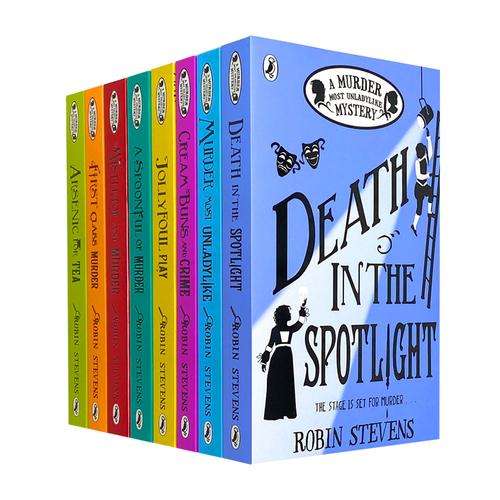
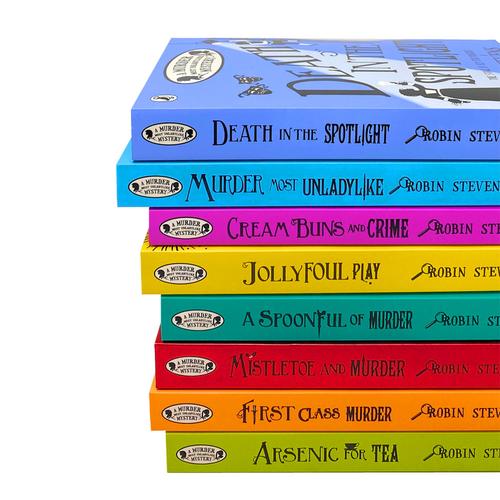
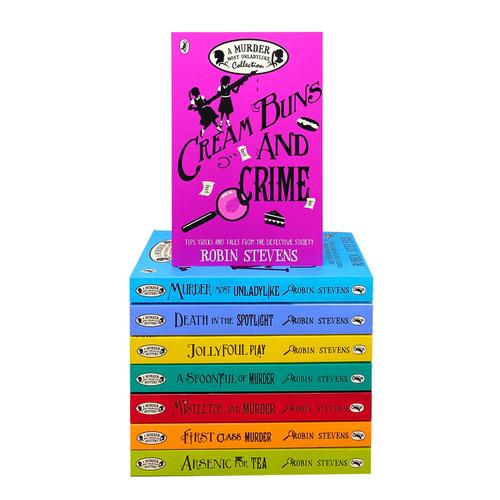
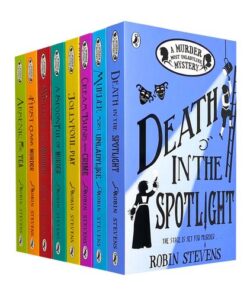
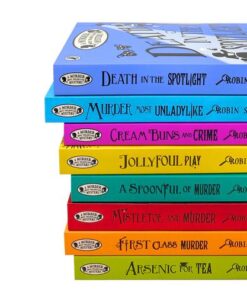
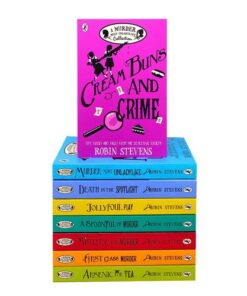
So what’s actually inside this beautiful, 8-book collection? It’s not just a series of mysteries; it is the complete, A-to-Z case files of one of the most charming and formidable detective duos in modern fiction: the Wells and Wong Detective Society.
The journey starts, as it should, with Murder Most Unladylike (or Murder is Bad Manners in the US). This is where we are introduced to our two heroines. Daisy Wells, the beautiful, blonde, and quintessentially English president of the society. She is brave, she is bold, she is a little bit arrogant, and she is the driving force of the operation. And then there is our narrator, Hazel Wong, the quiet, observant, and deeply intelligent Hong Kong native who is the secretary and the real brains behind the society. The story kicks off when Hazel discovers the dead body of the science mistress in the gymnasium. But when she returns with help, the body is gone. It’s up to Wells and Wong to solve the murder, all while trying to navigate the treacherous social landscape of their all-girls boarding school.
From there, the collection takes you on a whirlwind tour of classic, golden-age mystery settings. In Arsenic for Tea, the girls are at Daisy’s family estate for the holidays, and a murder happens during a tea party. In First Class Murder, they are on the world-famous Orient Express, and a wealthy heiress is murdered in her locked compartment. In Jolly Foul Play, they are back at Deepdean, but this time, the murder happens during the school’s 50th anniversary celebrations, with a cast of returning alumnae who all have secrets to hide.
The series continues with Mistletoe and Murder, a classic, snowed-in, country house mystery set during Christmas at Cambridge. A Spoonful of Poison sees the girls investigating a poisoning at a garden party. Death in the Spotlight takes them into the glittering, and deeply competitive, world of the London theatre. And the eighth book in the collection, Top Marks for Murder, brings them back to where it all began, to the Deepdean School for Girls, for a final, and deeply personal, case.
Each book is a beautifully crafted, and genuinely surprising, mystery. Each one is a loving homage to the great detective stories of the past. And together, they form a single, epic, and deeply satisfying story of friendship, of courage, and of two remarkable young women finding their place in a world that is constantly underestimating them.
The Benefits: More Than Just a Good Whodunit
So what are the real, tangible benefits of diving into this series? It’s not just about the pleasure of solving a good, old-fashioned whodunit, although that pleasure is immense. It is about a complete and total immersion in a world that is both comforting and thrilling.
The most obvious benefit is that you get to experience the pure, unadulterated joy of a great mystery. The plots are clever, the clues are fair, and the solutions are almost always surprising. This is a series that respects the intelligence of the reader and plays the game of the whodunit with incredible skill.
The second benefit is the deep, and deeply rewarding, friendship between Daisy and Hazel. They are the heart and soul of the series. They are two girls from completely different worlds who forge an unbreakable bond. They are not always nice to each other. They bicker, they get jealous, they hurt each other’s feelings. But in the end, they always, always have each other’s backs. Their friendship is one of the most realistic, and most moving, portrayals of female friendship in all of children’s literature.
The third benefit is the rich, and meticulously researched, historical setting. You don’t just read about the 1930s; you live in it. You learn about the social conventions, the class distinctions, the food, the fashion. It is a history lesson, wrapped in the delicious, candy-coated shell of a murder mystery.
And the biggest benefit of all, for me, was the feeling of comfort. The world of “A Murder Most Unladylike” is a world where, yes, bad things happen. But it is a world where two smart, brave, and determined young women can always, always make things right. It is a world where the puzzle always has a solution. And in a real world that so often feels chaotic, unjust, and unsolvable, that is a fantasy that is not just comforting, but deeply, profoundly necessary.
Who Is This For? The Modern Traditionalist
So who is this really for? After devouring the entire series, and then immediately wanting to start over again, I can tell you exactly who needs to have this beautiful, 8-book collection on their shelf.
This is for the young reader, the nine-to-twelve-year-old who is ready to graduate from simpler mysteries and is looking for a series that will challenge them, that will respect their intelligence, and that will make them fall in love with reading for a lifetime.
This is for the nostalgic adult, the one who grew up on a steady diet of Agatha Christie and who is craving a return to the golden age of detective fiction. This series is not a pale imitation; it is a worthy successor.
This is for the parent or the teacher, who is looking for a book series that is not just entertaining, but is also smart, well-written, and full of positive messages about friendship, about courage, and about the power of female intelligence.
And this is for the person who believes that a good story is a good story, regardless of the age of its intended audience. This is for the person who is not afraid to read a children’s book and to love it, without apology. This is for the modern traditionalist, the person who loves the comfort of the classic but who is not afraid of a modern, more diverse, and more emotionally intelligent take on it.
Conclusion: The End of the Boring Heroine
So here I am. The late-night, soul-crushing scroll through the endless, grim darkness of adult television is a thing of the past. I have found my comfort. I have found my joy. The “A Murder Most Unladylike” series is more than just a collection of children’s books. It is a complete, A-to-Z, and battle-tested blueprint for how to write a perfect, modern, classic mystery.
It is a declaration of independence from the tyranny of the boring, perfect heroine. With its flawed, funny, and deeply human protagonists, its clever, surprising plots, and its rich, immersive historical setting, it is, in my honest and battle-tested opinion, one of the single most charming and delightful mystery series of the past two decades.
If you are a young reader, an old reader, or just a human being who is in desperate need of a good, old-fashioned puzzle, then this is the answer you’ve been looking for. It is the end of the boredom. It is the end of the cynicism. And it is the beginning of a beautiful, and deeply satisfying, friendship with Daisy Wells and Hazel Wong.