

Introduction: The Agony of a Fragmented Past
Let me tell you about a feeling. It’s the late-night-in-the-library, staring-at-a-history-textbook, a-cold-knot-of-deep-boredom-and-frustration-in-your-stomach kind of feeling. You’re reading a chapter on ancient Rome, all about the caesars, the legions, and the aqueducts. Then, you flip the page, and suddenly you’re in ancient China, with the Han dynasty, the Silk Road, and the Great Wall. And the two stories feel completely, utterly, and profoundly disconnected, as if they were happening on two different planets.
I have been there. I have lived in that quiet, desperate state of historical whiplash for years. History, for me, was not a single, epic story of humanity. It was a chaotic, jumbled, and deeply unsatisfying collection of disconnected stories about a bunch of dead kings, pointless battles, and crumbling empires. It was a subject that I had been conditioned, by a series of dry, uninspired teachers and even drier, more uninspired textbooks, to see as a boring, and largely irrelevant, chore. I was being taught the “what,” but I was never, ever being shown the “why.”
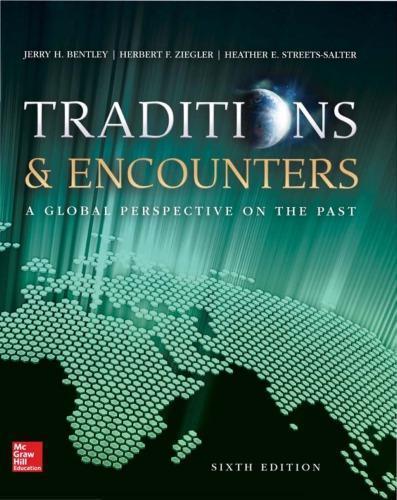
It was in that state of complete and utter frustration, of feeling like history was just a meaningless list of facts to be memorized for a test, that I first encountered Traditions & Encounters: A Global Perspective on the Past. The title itself was a promise. “A Global Perspective.” It was a promise to finally zoom out, to show me the big picture, to connect the dots that I always knew, on some deep, intuitive level, must be there.
This wasn’t just another textbook. It wasn’t a dry, academic rehashing of the same old, fragmented stories. This was a translation. This was a guide for the curious mind, for the student who was not satisfied with the old, siloed, and deeply Eurocentric way of looking at the past. It was a promise to take the separate, isolated stories of the world’s different civilizations and to weave them together into a single, beautiful, and coherent tapestry of the human experience. It felt less like a textbook and more like the epic, blockbuster movie that I had always wished history could be.
The Philosophy: A History of Connections, Not Just Civilizations
I was skeptical, of course. I had been burned by enough terrible textbooks to believe that they were all the same. I needed to understand the philosophy behind this one. Was this just a slightly more diverse version of the same old, broken approach, or was it a different way of thinking about the past entirely?
The core idea, as I came to understand it, was a profound and deeply refreshing paradigm shift. The philosophy of “Traditions & Encounters” is that you cannot truly understand world history by studying each civilization in a vacuum. The real, and far more interesting, story of humanity is the story of the connections, the interactions, and the encounters between these different societies.
This was a gut punch. I had spent my entire academic life being trained to see the world as a collection of separate, competing boxes: Egypt, Greece, Rome, China, India. This book was telling me that that was a lie. It was telling me that the real engine of history was not the achievements of any single civilization, but the complex, and often messy, web of trade, of migration, of conflict, and of cultural exchange that has connected us all since the very beginning.
The philosophy is that a deep, thematic understanding is the foundation of everything. The book is built around a dual framework. It honors the unique, and deeply important, traditions that have shaped each individual society. But it places an equal, and often greater, emphasis on the encounters that have driven change and development on a global scale.
It’s about teaching you to think like a world historian. It’s about learning to see the big picture, to identify the large-scale patterns of human history. You don’t just learn about the rise and fall of the Roman Empire; you learn about how it was connected to the Silk Road in China, to the trade routes of the Indian Ocean, and to the migratory patterns of the Germanic tribes.
And it’s about making the past relevant and engaging. The book is filled with real-world examples of these cross-cultural connections. It transforms world history from a dry, academic subject into a living, breathing, and incredibly fascinating story of our shared, collective human journey. This wasn’t just a different way of presenting the past; it was a different, and much more human, way of understanding it.
What’s Inside: A Guided Tour of Our Interconnected World
So what does this journey of understanding actually look like? The book is not just a collection of chapters; it is a carefully structured, and beautifully illustrated, guided tour of the entire, interconnected story of the human past.
The journey starts, as it should, with the very foundations of human society. The early chapters are a masterclass in the emergence of the first complex societies, in Mesopotamia, in Egypt, in the Indus Valley, in China, and in the Americas. But even here, from the very beginning, the focus is on the connections, on the early trade routes, on the spread of technologies and ideas.
Then, you move into the classical era. You get a deep, but always connected, dive into the great empires of the ancient world: Persia, China, India, Greece, and Rome. But you don’t just study them in isolation. You learn how the conquests of Alexander the Great created a vast, Hellenistic world that connected the Mediterranean to India. You learn how the Roman Empire’s insatiable demand for silk fueled the growth of the Silk Road and transformed the economy of Han China.
The book is packed with detailed, real-world examples and stunning, full-color maps and illustrations that bring these ancient connections to life. You don’t just read about the Silk Road; you see a map of its sprawling network. You don’t just read about the spread of Buddhism; you see a visual representation of its journey from India to East Asia. It is a visual feast that makes the abstract concept of cross-cultural exchange feel tangible and real.
And it doesn’t shy away from the hard stuff. There are entire, beautifully explained chapters on the complex and often brutal encounters that have shaped our world: the Mongol conquests, the European voyages of exploration, the transatlantic slave trade, the age of imperialism. But at every step of the way, the focus remains the same: on a deep, conceptual, and global understanding of both the unique traditions of each society and the powerful, world-changing encounters between them.
The Benefits: More Than Just a History Lesson
So what are the real, tangible benefits of learning about the past in this integrated, global way? It’s not just about being able to pass your world history exam, although this book will almost certainly help you do that with flying colors. It is about a complete and total transformation of your understanding of the world, and your place in it.
The most obvious benefit is that you will finally see the big picture. You will stop seeing the past as a random collection of disconnected stories, and you will start to see it as a single, epic, and deeply interconnected story of humanity. You will understand the deep, historical roots of the globalized world we live in today.
The second benefit is a massive increase in your critical thinking skills. The book’s relentless focus on comparison, on connection, and on causation will train you to think like a real historian. You will learn how to analyze evidence, how to identify bias, and how to construct a complex, nuanced argument.
The third benefit is a new sense of global citizenship. When you understand the deep, historical connections that have always linked the world’s different cultures and societies, it becomes much harder to see the world in terms of “us” and “them.” You develop a new appreciation for the incredible diversity of the human experience, and a deeper understanding of our shared, collective journey.
And the biggest benefit of all, for me, was a newfound sense of awe. The past, which had once seemed so boring and so irrelevant, was suddenly revealed to be a place of incredible, and almost unimaginable, drama, of epic journeys, of profound cultural exchange, of the constant, beautiful, and often brutal process of human beings encountering, and changing, one another.
Who Is This For? The Curious Global Citizen
So who is this really for? After living with this book, after having my entire relationship with a subject I thought I hated transformed by it, I can tell you exactly who needs to have this on their desk.
This is for the high school or college student who is struggling with world history, who feels like they are drowning in a sea of names, dates, and battles, and who is desperately looking for a way to make sense of it all. This book is that lifeline.
This is for the history enthusiast, the lifelong learner, the curious mind who wants to understand the world on a deeper, more fundamental level.
This is for the teacher, who is looking for a more powerful, more engaging, and more effective way to teach the beautiful, complex, and deeply important story of our shared human past to their students.
And this is for the person who believes that history is boring. This book will prove you wrong. It will show you that, with the right guide, the story of our past is the most epic, the most dramatic, and the most fascinating story of all.
This is not for the person who just wants a list of facts to memorize. This is for the person who wants to understand. This is for the person who is not afraid to think. This is for the person who is ready to see the world, and their place in it, with new, and much more insightful, eyes.
Conclusion: The End of the Disconnected Past
So here I am. The days of being bored by, and frustrated with, the fragmented, disconnected, and often meaningless story of the past are a thing of the past. “Traditions & Encounters: A Global Perspective on the Past” is more than just a textbook. It is a complete, A-to-Z, and battle-tested blueprint for understanding the epic, and deeply interconnected, story of humanity.
It is a declaration of independence from the tyranny of the old, siloed, and Eurocentric way of teaching and learning history. With its clear, simple, and powerful conceptual framework, its real-world examples, and its relentless focus on helping you to see the connections, it is, in my honest and battle-tested opinion, one of the single most important and game-changing tools that any student of the human story can have in their arsenal. If you are a student, a teacher, or just a curious human being, and you are tired of the confusion and the frustration of the old way of looking at the world, then this is the answer you’ve been looking for.
ISBN: 007340702X
Related products